Dubai is, by almost any measure, an iconically wealthy city. Its skyline pierces the desert sky with the kind of ambition that has, over four decades, transformed a sleepy fishing port into the commercial nerve centre of the Middle East. Yet the glittering façade of the Burj Khalifa and the artificial archipelago of Palm Jumeirah obscure a quieter, more uncomfortable truth: a great deal of Dubai's wealth is built on foundations that are far more vulnerable than they look. The city is connected to the global economy by a single, narrow, and increasingly contested gate — the Strait of Hormuz — and for the first time in a generation, that gate is no longer dependable.
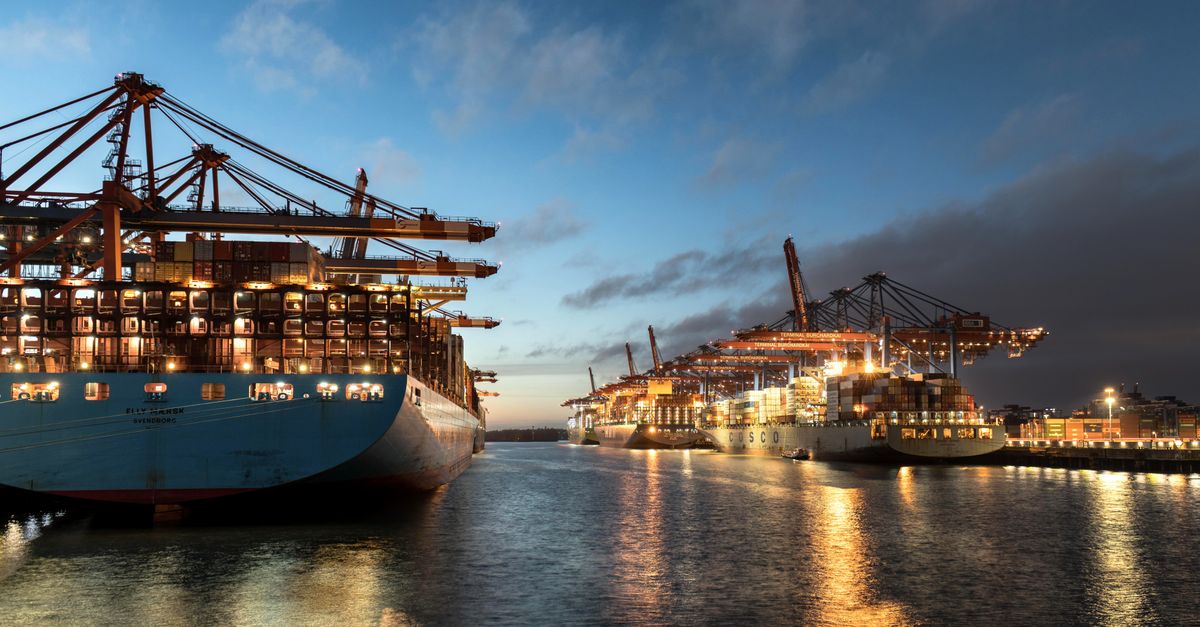
On July 22, 2026, Dubai-based port operator DP World signed a sweeping agreement with the Fujairah Ports Authority to develop two entirely new terminals on the opposite side of the United Arab Emirates — facilities that, unlike the flagship port of Jebel Ali, would sit outside the Persian Gulf and face directly onto the Gulf of Oman. For the first time in the modern history of the Emirates, a substantial share of Dubai's port capacity would be located beyond the reach of Hormuz. The project is the single largest bet the UAE has placed on infrastructure since the original construction of Jebel Ali in the 1970s, and it is being driven by a sobering realisation: that geography, long managed through diplomacy and insurance underwriters, may soon be managed by missiles.
To understand why the announcement matters, you have to understand the peculiar geography that produced Dubai in the first place. The United Arab Emirates — like almost every Gulf state — sits inside the Persian Gulf, a long, enclosed body of water with only one natural exit to the open ocean. At its narrowest point, that exit — the Strait of Hormuz — is barely 33 kilometres wide, separating Iran to the north from Oman's Musandam Peninsula to the south. There is no alternative maritime route. Every container of electronics arriving from Shenzhen, every tanker of crude leaving for Yokohama, every shipment of construction materials bound for a Dubai skyscraper must pass through the same corridor.

In 2024, according to the U.S. Energy Information Administration, approximately 20 million barrels of oil passed through Hormuz every single day — the equivalent of roughly one-fifth of all petroleum consumed on the planet. On top of that, nearly one-third of the world's liquefied natural gas trade also transits the strait. That extraordinary importance has, for decades, served as its own kind of shield. Closing Hormuz for any prolonged period would damage the economies of almost every Gulf state, disrupt Iran's own trade, send energy prices into orbit, and risk provoking a major international military response. For Dubai, this made Hormuz dangerous in theory, but dependable in practice.
02 · The FragilityWhy Hormuz Suddenly Matters Again
That calculation has changed. As the video above documents in detail, the Iranian Revolutionary Guards have declared the Strait of Hormuz closed "until further notice" on multiple occasions during the current crisis. Ships have been attacked. Insurance premiums have ballooned. Re-routings have cost billions. The risk that was once abstract — always there, yet always too distant to warrant real concern — is no longer distant at all.
For Dubai, the consequences of even a partial closure would be severe. Jebel Ali handled 15.5 million shipping containers in 2024, alongside millions of tons of machinery, vehicles, and construction materials. It is the largest port in the Middle East and one of the ten largest container ports in the world. If ships could no longer reliably reach it, Dubai would not simply lose access to a port — it would risk severing one of the main arteries through which its economy is supplied and connected to the world. Food, electronics, building materials, the consumables that keep a city of ten million running: all of it depends on this one corridor.


03 · The PivotDubai's Radical Answer: A New Front Door
Which leaves the city facing an extraordinary question. What if the only solution is to build another gateway altogether? Dubai's answer lies on the opposite side of the country. Unlike Jebel Ali, the new facilities will sit outside the Persian Gulf, facing directly onto the Gulf of Oman. Ships arriving from Asia, Africa, or Europe can reach them without passing through the Strait of Hormuz at all. Fujairah is already one of the world's largest bunkering hubs, serving as a major refuelling stop for ships travelling between Asia, Europe, and Africa — a strategic asset that the UAE has been quietly building for two decades.
The main project will be built at Al Regal'at, near Fujairah City. Designed as both a container and multi-purpose terminal, it is expected to handle up to 2.5 million twenty-foot equivalent units (TEUs) each year, along with 1.7 million metric tons of general cargo and the equivalent of around 190,000 vehicles. Farther north, a second terminal at Diba will add capacity for another 3.6 million metric tons of general cargo annually. The terminals will be developed in phases over approximately 24 to 30 months under a proposed 50-year agreement between DP World and the Fujairah Ports Authority.
Once complete, DP World's container capacity in the UAE is expected to increase by nearly 15 per cent, to an annual total of 22 million TEUs. Al Regal'at alone would have roughly one-sixth of Jebel Ali's current container throughput. It could receive not only essential imports during a crisis, but vehicles, machinery, construction materials, and millions of containers moving through the UAE's wider trading network. Most importantly, it would place a substantial piece of Dubai's port system beyond Hormuz for the first time.
Key Facts: The New Port Project
Source: DP World · July 2026- Operator
- DP World (Dubai) × Fujairah Ports Authority
- Concession Length
- 50 years (proposed)
- Main Terminal
- Al Regal'at, near Fujairah City
- Capacity (Al Regal'at)
- 2.5M TEUs · 1.7M tons cargo · 190k vehicles / year
- Second Terminal
- Diba — 3.6M metric tons general cargo / year
- Build Time
- 24–30 months (phased)
- Total UAE Capacity Lift
- +15% to 22 million TEUs annually
- Strategic Advantage
- Located outside the Strait of Hormuz — Gulf of Oman coast
04 · The Mountain ProblemWhy Fujairah Is Not a Silver Bullet
Eyeballing the map, however, reveals one rather obvious complication. Fujairah may offer direct access to the open ocean, but it lies more than 100 kilometres from Dubai, separated from the country's largest commercial centres by desert — and by the infamously challenging Hajar Mountains. Some of these peaks rise to more than 3,000 metres above sea level, forming a formidable natural barrier between Fujairah and the rest of the UAE. These are the same mountains that form the central obstacle for Dubai's other, arguably more radical proposal — the Union Strait, an audacious plan to cut an entirely new shipping canal right through the Musandam Peninsula.

A container arriving in Fujairah will need to be lifted from the ship, placed onto a truck or a train, carried across the Hajar range, and delivered into the warehouses, industrial zones, and distribution networks that have grown up around Jebel Ali over more than half a century. Every additional transfer adds time, cost, and another potential bottleneck. During a major disruption, this corridor might need to handle a substantial share of the food, machinery, construction materials, vehicles, and consumer goods normally arriving through Dubai's existing port. For Fujairah to function as Dubai's new front door, the UAE must also create a land bridge behind it — one capable of moving enormous quantities of cargo quickly and reliably from the open ocean back to the city.
05 · The Land BridgeEtihad Rail and the New Logistics Spine
Fortunately for Dubai, the foundations of this land bridge already exist. The UAE has spent years developing roads, freight infrastructure, and logistics hubs capable of moving cargo between its ports and industrial centres. More importantly, Etihad Rail now operates a national freight network connecting major ports and economic zones across the country, including facilities on both sides of the Hajar Mountains. DP World has also demonstrated that large quantities of cargo can be diverted over land during maritime disruption: its existing bonded corridors allow containers arriving at eastern gateways to travel directly to Jebel Ali without undergoing the full customs process at every stage.
Etihad Rail's national network became fully operational for freight in 2023, extending roughly 900 kilometres across all seven emirates. The line runs from the Saudi border in the west to Fujairah on the Gulf of Oman, with freight facilities serving both Fujairah port and Jebel Ali. Its fleet was designed to carry as much as 60 million metric tons of goods annually. In theory, that creates exactly the route Dubai needs: containers could be transferred from ships onto trains on the east coast, carried through the Hajar mountains, and delivered directly into the port and industrial system surrounding Jebel Ali.
But rail will not carry everything. Trucks will still be essential for moving containers between terminals, warehouses, factories, and final customers. DP World recently added 700 trucks to its regional fleet and opened fast-track bonded corridors that allow diverted cargo to cross by land without repeatedly stopping for customs clearance. The system has already been strongly pressure-tested: following the disruption at Hormuz, DP World says it moved more than 350,000 TEUs over land through alternative ports and corridors. That is a substantial emergency operation — but still only a small fraction of the more than 15 million TEUs that Jebel Ali handles in a normal year.


06 · A 50-Year BetRecreating the Jebel Ali Ecosystem
Even then, Fujairah would still not truly replace Jebel Ali. Over more than half a century, Dubai's original port has accumulated an enormous ecosystem of warehouses, factories, free-zone businesses, customs facilities, and shipping services around it. Recreating that on the opposite coast would take decades. The real purpose of the new terminal is therefore not replacement so much as resilience — giving Dubai a backup route when Hormuz can no longer be trusted.
Having said that, however, the project is also part of something much larger: an attempt by the United Arab Emirates to engineer its way around one of the most important geographic vulnerabilities on Earth. And it is not the first time the country has done so. Back in 2012, the UAE commissioned the Abu Dhabi crude oil pipeline, linking the country's oil fields directly to Fujairah in order to bypass the Strait of Hormuz. The 400-kilometre pipeline carries crude oil from Abu Dhabi's inland oil fields to Fujairah, allowing as much as roughly 1.8 million barrels per day to reach the open ocean without entering the Strait of Hormuz. During the recent disruption, that pipeline preserved approximately half of the UAE's pre-war oil exports, even as most normal Gulf shipping was brought to a near standstill.

07 · What Comes NextRedrawing the Map of Gulf Trade
Ultimately, there is more at stake here than just protecting the country from a potential crisis — although that is naturally the immediate priority. The UAE has spent decades presenting itself as a place where geography can be overcome through ambition, where deserts become cities, artificial islands rise from the sea, and an isolated Gulf coastline becomes a centre of global trade. But Hormuz is a reminder that some geographic constraints are harder to escape. No matter how advanced Dubai becomes, much of its connection to the outside world still depends on events it cannot control. The new terminals, the pipelines, the cross-country freight networks, and the daring canal proposals are all attempts to change that relationship.
Today, the UAE functions as a collection of cities facing inward toward the Persian Gulf. If successful, however, it could be something quite different in the future — with its coastlines infrastructurally bound into a single economic system, and with Fujairah becoming a second centre for trade, industry, storage, and logistics. If this new system works, the UAE will essentially have changed what its challenging geography means. Dubai's commercial reach would extend through the mountains to the Gulf of Oman, while the eastern emirates could take on a far larger role in the nation's future. The project will not make the UAE invulnerable — but it could make the country much harder to isolate, and ensure that one narrow passage no longer has the power to decide whether its economy remains connected to the world.
— Reporting by Joseph Shenouda. With additional analysis from DP World filings, U.S. EIA data, and the original video report embedded above. For deeper coverage of related Gulf infrastructure projects, follow The Shenouda Brief on LinkedIn.